A few days ago, I suggested a method for choosing a new DSLR body for low light action photography. I then outlined the current mainstream Canon and Nikon DSLR models, and made a few recommendations within each of those ranges. But how do Canon and Nikon currently fare against each other in this arena?
A general point that most photographic writers make is that if you’ve already invested in one system, there’s little point in entering another system. For example, it makes more sense to have two Canon bodies (and be able to share lenses and batteries between them), than to have one Canon body and one Nikon body (and not be able to share much between them). If you’re starting out new in the world of DSLRs, you don’t face this issue, and are free to choose between the two systems.
Historically, Canon or Nikon tend to ‘leapfrog’ over each other. At times, Canon will seem the better choice, such as the mid-1990s when Canon clearly had faster autofocusing than Nikon. At other times, Nikon will seem the better choice, such as in the late 2000s when the D3, D700, and D300 pushed high ISO image quality far beyond what Canon had. In other words, in terms of technical capability, there’s little or nothing between these two companies. That’s why, to me, ergonomics should be the most important long-term consideration. (Though we all understand that price will obviously be a key factor—and perhaps the most important one at the beginning.)
In the comparisons below, the only factor I won’t be commenting on (and obviously am not in a position to comment on) is how each DSLR will feel to you. Only you can be the judge of that. Hopefully, though, this article will be of some help in short-listing bodies to examine in person.
Entry-level consumer bodies
If you’re looking for the cheapest DSLR body, you’d almost certainly have to look at Canon. Nikon’s entry-level body might be cheaper at times, with discounts, but Canon seems to be able to maintain the lowest price overall—which shouldn’t be surprising, given that Canon is a much bigger and more diversified company than Nikon. Currently, the cheapest DSLR on the market for purchase new (rather than secondhand) is the Canon EOS 1200D. It currently costs around $50 less than the Nikon D3300, and is some $250 cheaper than the next Canon model—the EOS 100D. I think that $50 isn’t a large enough difference to base your choice of a system on, though, so the D3300 should certainly be in contention.
How do the D3300 and the 1200D compare against each other? Looking through the technical specifications, most features aren’t significantly different between the two models, but a couple of differences do stand out immediately:
- The D3300 can shoot at up to 5 fps, compared to the 1200D’s 3 fps. That’s a substantial difference for action photography.
- The D3300 has a much larger buffer—100 JPEG frames compared to the 1200D’s 12 JPEG frames. The D3300 lets you shoot at a faster rate, and will let you do so for much longer (20 s bursts compared to 4 s bursts).
Those two points are probably the most important in favour of the D3300, but it also has noticeably longer battery life (700 frames compared to the 1200D’s 500 frames). To me, these benefits are easily worth paying $50 more for, so based just on specifications, I’d recommend the D3300 over the 1200D.
My suggestion shouldn’t discourage you from handling both the D3300 and 1200D for yourself, though, and seeing which one feels more comfortable in hand (and, importantly, which one’s control system makes more sense) to you. You might find that you much prefer shooting with the Canon than with the Nikon. Buy with the longer term in mind, but if they both feel equally good to you, the Nikon D3300 gets my recommendation here.
Mid-range consumer bodies
Choices become more complex in the mid-range. In this part of the market, both Canon and Nikon can worry less about trying to make their products as affordable as possible. If the entry-level bodies are all ‘reasonably capable,’ then all the mid-range bodies will be ‘very capable.’
The Canon EOS 750D and the Nikon D5500 are priced identically at the moment. The 760D is $100 more than the 750D, and probably the better choice if you’re going to be staying with Canon in the long term, but it’s essentially the same camera as the 750D in technical capability, so let’s consider the 750D against the D5500. Interestingly, but perhaps not surprisingly, these two models look virtually identical on the key factors I mentioned earlier (which I wrote up prior to looking in-depth at the current DSLR line-ups). I see only two significant differences:
- The 750D would have the more capable AF unit (19 cross type sensors), compared to the D5500 (39 sensors, but with only nine of those being cross type sensors). The frame coverage is roughly the same between the two—DP Review has images showing the 750D and the D5500; scroll down on those two web pages to reach the appropriate diagrams.
- The D5500 has almost double the battery life of the 750D; roughly 820 frames compared to 440 frames. This is a huge difference.
This contest is much closer than the one between the D3300 and the 1200D, but I’d have to recommend the 750D (or 760D) over the D5500. I expect that the Canon AF unit would be noticeably faster and more accurate than the Nikon AF unit in this comparison, and in practice, battery life tends to be longer than specified in technical summaries when shooting action. (This would involve shooting in bursts, with minimal review of images on the camera—since keeping up to speed with the event will take priority over reviewing images. With action photography, you’ve either captured the moment or you haven’t, and reviewing the images only serves to distract you from monitoring the live action in front of you.)
I previously referred to Dave Pardue’s comments on the D5500, and in that article he rates the image quality of the D5500 as better than that of the 750D (or Rebel T6i). I’d agree that the samples support his comments, but I don’t think the difference would be visible in most images. Bear in mind that we’re looking at very small portions of the full images in that article (and I’ve examined both of the full images available), and I think a slight boost in contrast and sharpening would make the Canon image look just as good as the Nikon image in this comparison.
Again, these technical differences should be secondary to how the cameras feel in hand to you. If they both feel equally fine to you, I think the 750D would do the slightly better job in low light.
Prosumer bodies
We have three competing bodies here—Nikon’s D7200 and Canon’s EOS 70D and 7D Mk II. The D7200 and the 70D are matched on price, while the 7D Mk II is some $800 more expensive, and clearly intended to be in a different class of body. (In fact, the 7D Mk II is almost the same price as Nikon’s mid-range full frame body, the D750.) The only comparison in this part of the line-up is the D7200 against the 70D; the 7D Mk II is much more capable than either of those bodies, and I’ll write a bit more about that shortly.
Looking through the technical factors, I think the 70D and the D7200 are very evenly matched. There’s no single parameter that I could pick to clearly justify choosing one model over the other, but I think the D7200 just edges out the 70D courtesy of a slightly better viewfinder, slightly better AF frame coverage, slightly better battery life, and dual memory card slots. It’s not all one way traffic, though; the 70D has a variable-angle rear LCD, slightly better maximum frame rate, and slightly larger buffer.
It’s fairly close, but the D7200 gets my recommendation here over the 70D. If it weren’t for the significant price difference, though, neither the D7200 or 70D would be in the running against Canon’s 7D Mk II.
When I first read through the 7D Mk II’s technical specifications upon its announcement, it was obvious that here was a camera specially designed for indoor sports photography. I’ve already analysed what I consider to be the relevant details, so suffice it to say that if the higher price is within your reach, I think this will be clearly more capable than the other two bodies.
What should really be here competing against the 7D Mk II is the successor to the Nikon D300 and D300S, but the rumoured D400 has not been announced yet. Until that time, the 7D Mk II is the only cropped frame body above the $2,000 mark—and it’s a very capable one, at that.
Full frame bodies
You should only really consider full frame bodies if you’re clear about what you’re trying to achieve photographically. There’s little point in moving from cropped frame to full frame just for the sake of moving to full frame. If you’ve read to this point, I’d expect you’re either very curious about comparisons in this part of the market or you’re very serious about getting the best image quality possible in a reasonably sized camera body.
The Canon EOS 6D and the Nikon D610 are the cheapest full frame bodies available from the two market leading manufacturers. The D610 is around $200 cheaper than the 6D, but actually looks like the more capable model for low light action shooting. It has a slightly better viewfinder, better AF unit, noticeably faster maximum frame rate, and dual memory card slots. It does, however, have poorer battery life and a slightly smaller buffer than the 6D.
The D610 seems the better choice here, but if your main purpose is low light action photography, I think you’d be better off overall with the Canon EOS 7D Mk II or the Nikon D7200.
Given that the D750 is only $200 more than the 6D, I suppose that comparison is the next one to make. Since I rated the D610 slightly higher than the 6D, it should be no surprise that I think the D750 surpasses the 6D by a bigger margin. Every technical specification except buffer size is better with the D750, and we’ve regained essentially all the ‘lost’ capability when moving up from the D7200 to the D610. From that point of view, we could almost consider the D750 the full frame sibling of the D7200, so it’s easy for me to recommend the D750 if your budget suits.
Next we take a $1,000 leap up to the Canon EOS 5D Mk III and the Nikon D810. Both models have 100% viewfinders with similar magnification, very capable AF units with reasonable frame coverage, reasonable maximum frame rates, and similar buffer sizes. For $100 more than the 5D Mk III, you’ll get noticeably higher sensor resolution (36 MP rather than 22 MP) and much better battery life (1,200 frames rather than 950 frames) with the D810. It’s clear that the D810 looks like the more capable body here.
Neither the D810 nor the 5D Mk III are optimised for shooting low light action, though. I’d still have to point back to the 7D Mk II as currently having the best feature set specifically for that type of photography. The only step up from there, for low light shooting, is to move to one of the professional bodies, such as the Canon EOS-1D X or Nikon D4S. These bodies are in the $7,000 range, or twice as expensive as the 5D Mk III or D810.
Summary
In the context of your budget, consider the following bodies in order of increasing price: Nikon D3300 ($500), Canon EOS 750D ($900), Nikon D7200 ($1,300), Canon EOS 7D Mk II ($2,100), and Nikon D750 ($2,200). Out of those bodies, I’d recommend three as having no practical limitations for low light action photography.
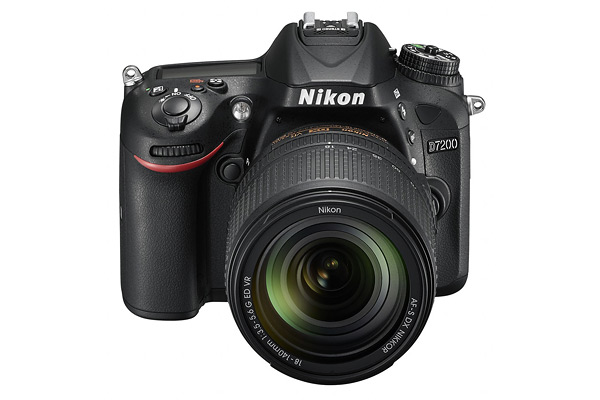
With a Nikon D7200 for $1,300, you’ll be getting a 100% viewfinder with good magnification (0.63x), a good AF unit covering most of the frame, a very respectable 6 fps burst rate, good buffer (9 s in JPEG mode or 3 s in RAW mode), excellent battery life (1,110 frames), dual SD card slots, and the ability to autofocus with any Nikkor AF or AF-S lens. As of June 2015, this is probably the best value for money DSLR that’s very capable for low light action photography.
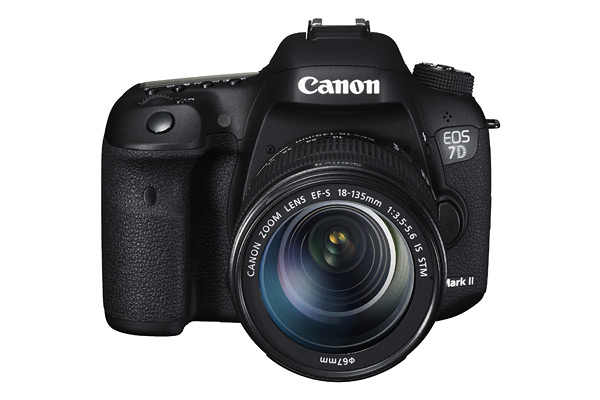
For $800 more than the D7200 (or a further 60% in financial outlay), we step up to the Canon EOS 7D Mk II. The viewfinder will be essentially the same as that on the D7200, but the AF unit is a major improvement (all cross type sensors, rather than just the central ones, while still covering most of the frame), burst rate jumps significantly to 10 fps, and buffer size is roughly the same (10 s in JPEG mode, or 2.5 s in RAW mode). The only significant loss is in battery life (670 frames, down from the D7200’s 1,110 frames), but that still remains respectable. As of June 2015, this is probably the most capable DSLR for low light action photography short of the $7,000+ professional models.
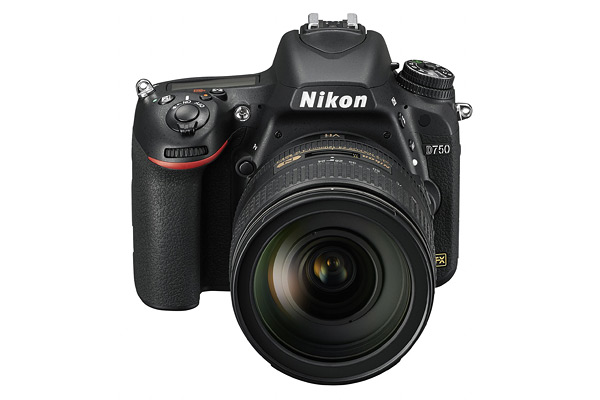
For $100 more than the 7D Mk II, we step up to the Nikon D750 full frame DSLR. Apart from the technical advantages and disadvantages of a full frame sensor, as mentioned previously, we get a larger viewfinder and almost double the battery life, but most other specifications are worse—burst rate goes down (to 6.5 fps) and the buffer is smaller (6 s in JPEG mode, or 2 s in RAW mode). The D750 should give better image quality, but will probably feel noticeably less responsive than the 7D Mk II. Ironically, the most expensive of the final three DSLRs is the least capable (in my view) for low light action photography … though it should also have the best image quality of the three.
If your budget allows you to choose between these three models, you’d need to decide which is the highest priority for you: the best value for money (D7200), the best responsiveness (7D Mk II), or the best image quality (D750). Any of these three bodies should serve you very well.
Anyone interested in the Canon EOS 7D Mk II might also be interested in reading about its viewfinder and its weather sealing.